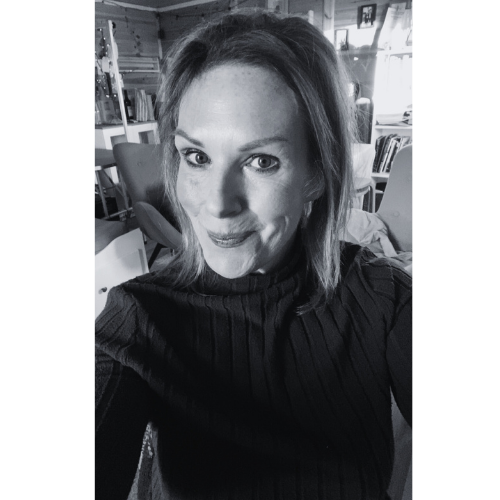
About Dr Rachel
Neuroscientist • Researcher • Architect of a Nervous‑System Discipline
My work began long before neuroscience. I started in Classics, studying ancient languages, philosophies, and the ways early civilisations understood the human condition. Those texts taught me that wisdom is rhythmic and embodied, that ritual is a form of knowledge, and that language shapes experience — a truth that still anchors everything I do.
From there, I moved into psychology, seeking to understand the mind not only through story and philosophy but through behaviour, perception, and emotional life. Psychology opened the door to the sciences of adaptation, resilience, and human complexity. I then trained in molecular and metabolic biology, studying how the smallest cellular processes influence energy, mood, resilience, and the capacity to thrive.
This work gave me a deep understanding of the biological foundations of wellbeing — how depletion, stress, and metabolic load shape emotional life long before we are conscious of it. My doctorate brought these threads together. I specialised in atypical populations and their wellbeing — people whose developmental paths, sensory worlds, or lived experiences fall outside the expected pattern. This research taught me that difference is not a deficit; it is a form of intelligence. It also taught me that wellbeing is not a psychological idea; it is a biological, emotional, and relational state.
Today, I am a neuroscientist whose work spans biology, emotion, adaptation, trauma, and human flourishing. I understand the human system from the molecular to the behavioural, from metabolic load to emotional expression, from ancient philosophy to modern neuroscience.
My Scientific and Ceremonial Approach
My work is not coaching. It is not therapy. It is not performance. It is a discipline — a way of working with the nervous system that honours sovereignty, clarity, and right‑measure living.
My approach blends: - neuroscience - trauma‑aware research - molecular and metabolic biology - ancient philosophy - ceremony and ritual - emotional stewardship
Every element — the pacing, the language, the thresholds, the architecture — is intentional.
Nothing is accidental. Everything is designed to support restoration.
The Origin of My Discipline
This work emerged from a simple but urgent observation: people are living at the wrong pace.
They are exhausted but still moving. Overwhelmed but still performing. Longing for steadiness but unsure how to reclaim it.
My research across disciplines taught me that: - the nervous system cannot thrive in constant acceleration - trauma is an adaptation, not a flaw - metabolic depletion is not a moral failure - atypicality is a form of intelligence - restoration is biological, not optional My discipline is my response — a sanctuary‑grade approach to right‑measure living.
Who This Work Is For
People who find their way to this work are often: - living at a pace that is unsustainable - carrying quiet depletion or emotional fatigue - highly sensitive, atypical, or over‑adapted - longing for clarity, steadiness, and coherence - ready to return to themselves without performance or pressure This work meets you exactly where you are.
What I Stand For
This discipline is built on the following field conditions:
- integrity
- truth
- clarity
- sovereignty
- right‑measure
- restoration
- precision
- ceremony
- compassion without collapse
These are not values. They are the architecture of the Sanctuary.
A Note on Place
I live in Winchester with my family, and my work is shaped by the landscapes that have held me.
My life blends research, ceremony, family, and the slow architecture of legacy.